Have you ever wondered how your body processes the food you eat? The answer lies in digestive enzymes. These tiny helpers play a crucial role in breaking down carbs, proteins, and fats into smaller molecules. This makes it easier for your body to absorb essential nutrients.
Your body naturally produces these enzymes in the mouth, stomach, pancreas, and small intestine. For example, amylase starts breaking down carbs in your mouth, while protease and lipase work on proteins and fats in the stomach and intestines. This process ensures your meals are properly digested.
Sometimes, your body may not produce enough enzymes, leading to issues like bloating or gas. This is where enzyme supplements can step in to support your digestion. Later in this article, I’ll explore how these supplements and natural food sources can help.
Key Takeaways
- Digestive enzymes break down carbs, proteins, and fats for nutrient absorption.
- Your body produces enzymes in the mouth, stomach, pancreas, and small intestine.
- Amylase, protease, and lipase are key enzymes for digestion.
- Low enzyme levels can cause bloating or gas.
- Supplements can support digestion when natural enzyme production is low.
Understanding Digestive Enzymes: The Basics of Digestive Health
Your body relies on tiny helpers to process what you eat. These helpers are called digestive enzymes. They play a key role in breaking down food into smaller, absorbable nutrients. Without them, your body wouldn’t get the energy and vitamins it needs.
What Are Digestive Enzymes?
Digestive enzymes are proteins that speed up chemical reactions in your body. They’re produced in different parts of your digestive tract, like the mouth, stomach, and pancreas. Each enzyme has a specific job. For example, amylase breaks down carbs, while lipase targets fats.
There are several types of enzymes:
- Protease: Breaks down proteins into amino acids.
- Lipase: Helps digest fats into fatty acids.
- Amylase: Converts carbs into simple sugars.
- Lactase: Breaks down lactose in dairy products.
These enzymes ensure your meals are properly processed.
The Role of Enzymes in Breaking Down Food
Digestion starts in your mouth. Saliva contains amylase, which begins breaking down carbs. As food moves to your stomach, protease takes over to handle proteins. In the small intestine, lipase and other enzymes finish the job.
Morgan Denhard, a registered dietitian, explains,
“Enzyme balance is crucial for gut health. Without enough enzymes, you may experience bloating, gas, or nutrient deficiencies.”
Understanding these basics helps you make informed choices about supplements. Whether you’re dealing with lactose intolerance or just want better digestion, knowing how enzymes work is the first step.
The Science Behind the Digestive Process
The journey of food through your body is a fascinating process powered by enzymes. These tiny proteins work tirelessly to break down your meals into nutrients your body can use. Understanding this process can help you make better choices for your gut health.
How Enzymes Work from the Mouth to the Pancreas
Digestion begins in your mouth. Saliva contains amylase, an enzyme that starts breaking down carbs into simpler sugars. As you chew, food mixes with saliva, and this enzyme gets to work.
Once food reaches your stomach, protease takes over. This enzyme breaks proteins into amino acids. Your stomach’s acidic environment helps activate protease for efficient digestion.
In the small intestine, lipase steps in to break down fats into fatty acids. The pancreas also releases enzymes like amylase, protease, and lipase to complete the process. This teamwork ensures your meals are fully digested.
The Connection Between Enzymes and Nutrient Absorption
Enzymes play a crucial role in nutrient absorption. Without them, your body wouldn’t be able to extract vitamins, minerals, and energy from food. For example, amylase converts carbs into glucose, your body’s primary energy source.
Clinical research shows that enzyme activity directly impacts nutrient absorption. A study published in the Journal of Nutrition found that low enzyme levels can lead to deficiencies, even if you eat a balanced diet.
Understanding this science can help you choose the right enzyme supplements. These products can support your body’s natural processes, especially if you experience bloating or gas after meals.
| Enzyme | Function | Location |
|---|---|---|
| Amylase | Breaks down carbs | Mouth, pancreas |
| Protease | Breaks down proteins | Stomach, pancreas |
| Lipase | Breaks down fats | Small intestine, pancreas |
By learning how enzymes work, you can take steps to improve your digestion and overall health. Whether through diet or supplements, supporting your body’s enzyme activity is key to feeling your best.
Choosing High-Quality Digestive Enzymes: What to Look For
Not all enzyme products are created equal, and knowing what to look for is key. Whether you’re dealing with bloating or just want better digestion, selecting the right supplement can make a big difference. Let’s break down the options and factors to consider.
Comparing Over-the-Counter and Prescription Options
There are two main types of enzyme supplements: over-the-counter (OTC) and prescription. OTC products are widely available and can help with general digestive issues. However, they’re not regulated by the FDA, so quality can vary.
Prescription options, like pancreatic enzyme replacement therapy (PERT), are often recommended for specific conditions. Morgan Denhard, a registered dietitian, explains,
“PERT is crucial for individuals with cystic fibrosis or chronic pancreatitis, as it provides precise enzyme levels tailored to their needs.”
Understanding Quality, Dosage, and FDA Regulations
When choosing an enzyme supplement, focus on quality and dosage. Look for products that list specific enzyme types like protease, lipase, and amylase. These enzymes break down proteins, fats, and carbs, ensuring your meals are properly digested.
Dosage is also important. Too little may not help, while too much could cause discomfort. Since OTC supplements aren’t FDA-regulated, check for third-party testing to ensure safety and potency.
Here’s a quick guide to key enzymes and their functions:
- Protease: Breaks down proteins into amino acids.
- Lipase: Helps digest fats into fatty acids.
- Amylase: Converts carbs into simple sugars.
By understanding these factors, you can make an informed choice and find a product that supports your digestion effectively.
Incorporating Digestive Enzymes into My Daily Routine
Adding digestive enzymes to my daily routine has made a noticeable difference in how I feel after meals. I’ve learned that timing and pairing them with the right foods can maximize their benefits. Here’s how I’ve integrated them into my lifestyle for better digestion and overall comfort.

When to Take Enzyme Supplements
Timing is crucial when it comes to enzyme supplements. I take mine right before or during meals to ensure they’re active when my body needs them most. Research shows that taking enzymes with food improves digestion and reduces symptoms like bloating.
For heavier meals, especially those rich in protein or fat, I adjust the dosage slightly. This helps my body break down nutrients more efficiently. Here’s a quick guide to timing based on meal types:
| Meal Type | Best Time to Take Enzymes |
|---|---|
| Light Snacks | Just before eating |
| Balanced Meals | With the first bite |
| Heavy Meals | During or immediately after eating |
Integrating Them with a Balanced Diet
Pairing enzyme supplements with a balanced diet has been a game-changer for me. I focus on including foods that naturally support digestion, like fruits, vegetables, and fermented products. This combination helps my gut stay healthy and reduces the need for higher supplement doses.
For example, I include pineapple and papaya in my diet, as they contain natural enzymes like bromelain and papain. These enzymes help break down proteins and improve nutrient absorption. Adding probiotic-rich foods like yogurt also supports gut bacteria, enhancing overall digestion.
If you’re dealing with lactose intolerance, consider a supplement with lactase. This enzyme breaks down lactose in dairy products, making them easier to digest. Pairing it with a lactose-free diet can significantly reduce discomfort.
By combining supplements with mindful eating, I’ve noticed fewer digestive issues and better energy levels. It’s a simple yet effective way to support your body’s natural processes.
Food Sources Rich in Natural Digestive Enzymes
Nature offers a variety of foods packed with natural enzymes that can support your digestion. These foods not only enhance nutrient absorption but also help reduce symptoms like bloating and discomfort. Incorporating them into your diet can make a noticeable difference in how you feel after meals.
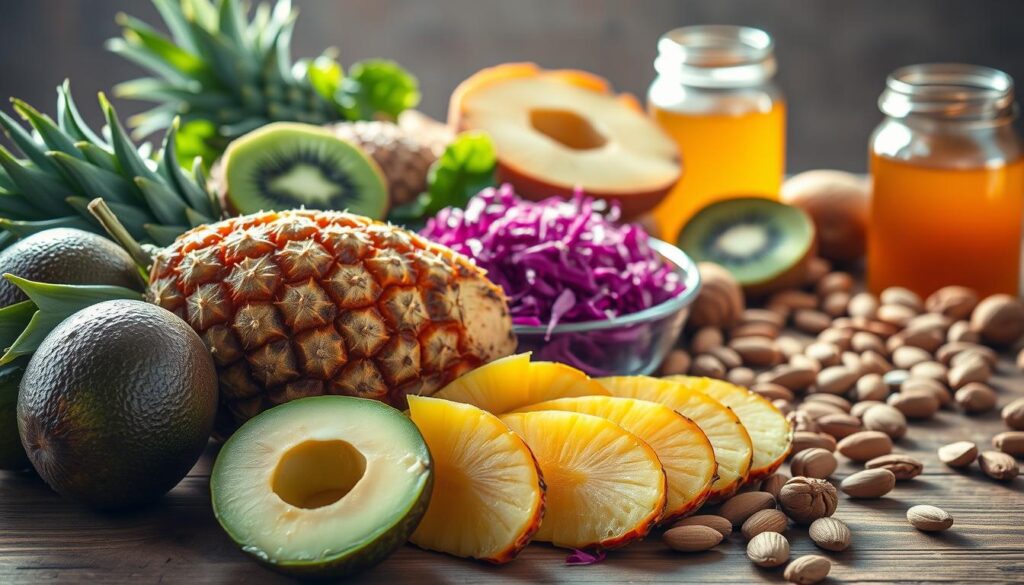
Fruit and Vegetable Enzyme Boosters
Tropical fruits like pineapple and papaya are excellent sources of natural enzymes. Pineapple contains bromelain, which helps break down proteins. Papaya is rich in papain, another enzyme that aids in protein digestion. Both fruits are not only delicious but also support your gut health.
Mangoes are another great option. They contain amylase, an enzyme that breaks down carbs into simpler sugars. Including these fruits in your diet can improve digestion and reduce the need for supplements.
Fermented Foods and Their Gut Benefits
Fermented foods like kimchi, kefir, and sauerkraut are packed with beneficial bacteria and enzymes. These foods promote a healthy gut microbiome, which is essential for efficient digestion. Studies show that fermented foods can enhance enzyme production and improve nutrient absorption.
For example, kefir contains lactase, an enzyme that breaks down lactose in dairy products. This makes it a great option for those with lactose intolerance. Adding fermented foods to your meals can support overall gut health and digestion.
| Food | Enzyme | Benefit |
|---|---|---|
| Pineapple | Bromelain | Breaks down proteins |
| Papaya | Papain | Aids in protein digestion |
| Mango | Amylase | Converts carbs into sugars |
| Kefir | Lactase | Breaks down lactose |
Integrating these foods into your daily diet is simple. Start by adding pineapple or papaya to your breakfast smoothies. Include fermented foods like kimchi or sauerkraut as a side dish. These small changes can have a big impact on your digestion and overall well-being.
Managing Digestive Discomfort: Bloating and Gas Relief
Dealing with bloating and gas can be frustrating, but understanding the root causes can make a big difference. Over time, I’ve learned to identify trigger foods and adopt habits that keep my gut happy. Here’s how you can do the same.
Identifying Common Trigger Foods
Certain foods are more likely to cause bloating and gas. Processed meals, high-sugar snacks, and fatty dishes are common culprits. For me, dairy products were a major trigger until I discovered lactase supplements.
Here’s a quick list of foods to watch out for:
- Dairy: Milk, cheese, and ice cream can cause discomfort for those with lactose intolerance.
- Beans and legumes: High in fiber, they can lead to gas if not properly digested.
- Cruciferous vegetables: Broccoli and cauliflower are healthy but can cause bloating.
Tracking your meals can help pinpoint specific triggers. I started a food diary and noticed patterns that guided my dietary adjustments.
Lifestyle Tips for a Happier Gut
Small changes in your daily routine can significantly improve digestion. Staying hydrated is essential—water helps your body process food more efficiently. I also drink peppermint or ginger tea after meals to soothe my stomach.
Eating bitter foods like arugula or dandelion greens can stimulate enzyme production. This helps break down food and reduces bloating. Regular exercise, even a short walk, can also aid digestion.
Here are a few habits I’ve adopted:
- Chew food thoroughly to make digestion easier.
- Avoid eating too quickly to prevent swallowing air, which causes gas.
- Include probiotic-rich foods like yogurt to support gut bacteria.
By combining these tips with mindful eating, I’ve noticed fewer digestive issues and better overall comfort. It’s all about finding what works for you and sticking to it.
Do Digestive Enzyme Supplements Really Work?
Many people wonder if enzyme supplements truly make a difference in their digestion. To answer this, I looked into clinical research and user experiences to see if these products live up to their claims. Here’s what I found.
What Clinical Research Tells Me
Studies show that enzyme supplements can help with symptoms like bloating and indigestion. For example, a 2019 study published in the Journal of Clinical Gastroenterology found that supplements containing protease, lipase, and amylase improved digestion in individuals with enzyme deficiencies.
However, not everyone benefits equally. Research suggests that people with conditions like lactose intolerance or pancreatic disorders see the most improvement. For others, the effects may be minimal.
User Experiences and Popular Products
User reviews provide mixed insights. Many people report fewer digestive issues after using supplements like JSHealth Detox and Debloat or Happy Mammoth Bloat Banisher. One user shared,
“I noticed less bloating and gas within a week of taking these supplements. They’ve become a staple in my routine.”
On the other hand, some users see no change. This could be due to factors like dosage, quality, or individual gut health. Here’s a quick comparison of popular products:
- JSHealth Detox and Debloat: Contains a blend of enzymes and probiotics for gut health.
- Happy Mammoth Bloat Banisher: Focuses on reducing bloating with natural ingredients.
- Enzymedica Digest Gold: Targets multiple digestive issues with a broad-spectrum formula.
While these products have positive reviews, it’s important to remember that results vary. What works for one person may not work for another.
In conclusion, enzyme supplements can be effective, especially for those with specific digestive issues. However, they’re not a one-size-fits-all solution. Consulting a healthcare professional can help you determine if they’re right for you.
Expert Insights and the Future of Gut Health
Gut health is evolving rapidly, with new research and expert insights shaping the future. Registered dietitians and researchers are uncovering innovative ways to support digestion and overall well-being. Let’s explore the latest perspectives and trends in this field.

Perspectives from Registered Dietitians
Registered dietitians emphasize the importance of enzymes in maintaining a healthy gut. Morgan Denhard, a registered dietitian, explains,
“Enzymes play a critical role in breaking down food and ensuring nutrient absorption. Without them, even the healthiest diet can fall short.”
Experts also highlight the benefits of combining enzyme supplements with a balanced diet. For example, pairing protease with protein-rich meals can enhance digestion and reduce bloating.
Latest Trends in Digestive Health Research
Recent studies focus on the gut microbiome’s influence on overall health. Researchers are exploring how probiotics and prebiotics can work alongside enzymes to improve digestion. Emerging trends include:
- Personalized enzyme supplements tailored to individual needs.
- Advanced gut diagnostics to identify specific digestive issues.
- Innovative products combining enzymes with microbiome-supporting ingredients.
These advancements are paving the way for more effective solutions to common digestive problems.
From my experience, staying informed about these trends has helped me make better choices for my gut health. Whether through supplements or dietary adjustments, understanding the science behind digestion is key to feeling your best.
Conclusion
Small changes in your routine can lead to big improvements in digestion. Digestive enzymes play a vital role in breaking down meals, ensuring your body absorbs nutrients effectively. Whether from natural sources like pineapple and papaya or through enzyme supplements, these tools can make a noticeable difference.
Experts agree that combining enzyme-rich food with quality supplements supports optimal digestion. Clinical research and user experiences highlight their benefits, especially for those with specific needs. However, it’s essential to choose products that match your requirements and consult a professional if symptoms persist.
Exploring ways to optimize digestion is a journey worth taking. By understanding how enzymes work and incorporating them into your lifestyle, you can enjoy better gut health and overall well-being.